Why I Left Türkiye (And Why Sydney Isn’t All It’s Cracked Up to Be)

So, I did the thing. Just over a year ago I left Türkiye—beautiful, chaotic, full-of-life Türkiye—and came back to Sydney. Yep, packed my bags, waved goodbye to my gorgeous life there, and here I am. Why? Oh, you know, little things like the economy taking a nosedive and some personal stuff that needed sorting. Plus, it seemed like a good idea at the time. Spoiler alert: It was not.

You know when you think you’re coming home to this warm, cozy embrace? Like, “Ah, Sydney, my love, my childhood streets, my people.” Yeah, nah. Instead, I got slapped in the face with traffic, a 9-to-5 grind, and the soul-crushing realisation that I’ve turned into one of those people who misses Türkiye every time I see a sad little imitation of gözleme at a café. Life here is all about emails, deadlines, and trying to make ends meet. In Mersin, I fought over who could bring me more cay. Let me tell you, Sydney is no Mersin.

Sure, it’s been nice catching up with family and friends (you know, once I remembered how to make actual social plans). But deep down, I’m counting down the days until I’m back in Mersin next month for a well-earned break. That trip is the only thing keeping me going right now. I’ve even got a countdown app on my phone. 30 days, 4 hours, and 37 minutes. Not that I’m obsessed.

Oh, and let’s talk about my attempts to get traditionally published. I thought, “Hey, I’m funny, people seem to like my trashy novels. Surely people back in Oz would want to read that!” Well, apparently not. According to the experts, Australians aren’t keen on books about Türkiye. “Nah mate, give us something with a BBQ and a kangaroo,” I assume is what they meant. But I’m nothing if not stubborn, and… *drumroll please* I’ve just finished a Christmas novella, Mistletoe and Turkish Delight. Now on presale you order it now and have it in your Kindle on 26 October 2024. Get ready to catch up with Ginger and all her friends for a Christmas celebration in Istanbul (which a heavy dose of laughs, love and drama).

In other news, I’ve had a self-imposed social media ban for ages. Why? Because the world is a dumpster fire, and I didn’t want to add any more fuel to it. But recently, I’ve dipped my toes into TikTok because apparently, that’s what we’re doing now. Follow me, please—I promise I won’t bombard you with dance trends, but I might just do something ridiculous which is always fun.

@authorjanegundogan

Calling all Booktokers: it’s time to rally behind my rom-com series! Prepare to swoon, laugh, and maybe even spill your wine as you dive into the quirky world of my lovable characters. Let’s spread the love one hilarious page at a time! 💕📚 #RomComRevolution #BooktokFaves #fyp #foryoupage #booktok #booktoker #authorlife #kindleunlimited #kindleunlimitedromancebooks

♬ original sound – T St. James

So, that’s where I’m at. Counting down the days to my Mersin trip, dipping my toes in TikTok, and getting ready to share my novella with the world. See you on 26 October—and until then, enjoy your gözleme (the sad café version) and wish me luck as I navigate Sydney’s traffic.


Did you know that Janey in Mersin was named one of the Top 20 expat blogs in Türkiye by Feedspot? Ch-ch-check it out here!

And That’s The Çay

In case you guys don’t already know, I write smut. Officially, I like to refer to myself as an “author of multicultural rom-com’s set against the backdrop of magnificent Türkiye”, but after an interview that I did last year was pulled from a major Turkish newspaper because my writing was deemed “too vulgar”, I’d rather just call a spade a spade. So, yeah, smut.

I know that a huge number of book sales come from a rather active corner on Tiktok called “Booktok”. You make a reel about your book, you make it hot and steamy, and the masses will come. Seems simple, yeah?

I’ve tried to make reels but I just can’t seem to get my head around it. I guess I could pay someone to do it, but, hey, I live in Türkiye, and most of us can’t afford bread these days let alone pay for a social media advisor manager. I’ll stick to blogging and the very occasional sale of my smutty books, thankyouverymuch!

Recently, I stumbled upon a BookToker (yes, that’s a real term) gushing over Turkish diziler, and my aimless scrolling came to a crashing halt. Turkish diziler is MASSIVE on Booktok!

The world of Turkish diziler is a treasure trove of slow-burn romances, heartwarming stories, and captivating plotlines. From Erkenci Kuş (Early Bird) starring the dreamy Can Yaman to Sen Çal Kapımı (You Knock on My Door), there is no shortage of swoon-worthy content. While the world has recently caught on to these gems, we expats and Türkiye enthusiasts have been enjoying them religiously for years.

Now, let me introduce you to a few of my absolute favourites that will undoubtedly make you fall head over heels:

Seversin (English: Love and Hate)

Tropes: Grumpy/sunshine, redemption, second chance.

No. of episodes: 20 episodes

This one-season wonder revolves around Tolga, a famous actor with a huge chip on his shoulder, and Asya, whose encounter sparks a “hate at first sight” kind of chemistry. Prepare to be wrapped around its fingers!

“İyi Günde Kötü Günde” (Happily Ever After)

Tropes: love triangle, second chance

No. of episodes: Only 6, so your next rainy Sunday is sorted.

Synopsis: Leyla, a wedding planner, finds herself organizing the wedding of her ex, Sarp. The drama unfolds as past and present collide in this short but gripping series.

Gönül İşleri (Love Affairs or Affairs of the Heart)

Tropes: Opposites attract, second chance

No. of episodes: 28

A tale of three sisters and their journey with hearts and love. The hottie, Can Yaman, got his start on this show so its worth watching for him alone!

Bay Yanlış (Mr. Wrong)

Tropes: Love/hate, opposites attract

No. of episodes: 14

Another banger with the beautiful Can Yaman. This specimen is built for rom-com’s and I’ve now just realised I’ve referred to three of his shows in this post. I’m clearly fan-girling but, damn, he is one beautiful man!

Ah Nerede (Oh Where?):

Tropes: This one has so many different rom-com tropes in it, I don’t know where to begin.

No. of episodes: 7 (was originally a 1975 film starring Tarik Akan)

Follow the adventures of three brothers who chase their own passions after being sent to Istanbul for education. This series is a delightful blend of various rom-com tropes that will keep you hooked.

Her Yerde Sen (Everywhere I Go):

Tropes: opposites attract, love/hate, mistaken identity

No. of episodes: 23

Architect Demir faces chaos and comedy when he buys his childhood home, only to discover that he shares it with Selin, who refuses to move out. A true recipe for laughs and love!

Benim Tatli Yalanim (My Sweet Lie)

Tropes: I’m a sucker for the single dad trope so I’m totally down for rewatching this one.

No. of episodes: 28

Get ready for a heartwarming story of a single father whose little white lie opens the door to a blossoming romance.

For those who prefer to indulge in the world of podcasts, “Dizzy for Dizi” is a must-listen. Hosted by two Californian girls, they religiously watch these diziler and provide insightful breakdowns of each episode. Their latest obsession? “Aşk 101 (Love 101)” – think Gossip Girl meets 90210.

Before I wrap up this passionate ode to Turkish dizis, I want to hear from you! What’s your favourite Turkish dizi right now? Have any recommendations for me? Let’s keep this love affair alive and share Turkish rom-com’s with the world!

As for me, I’ll continue my quest to conquer Tiktok, even if making steamy reels feels like an impossible task. Until then, I’ll happily immerse myself in writing my smut and enjoying the heartwarming tales of love and passion from Turkish diziler.

True romance knows no boundaries, and Turkish diziler are living proof of that!

And here’s a photo of Can Yaman… just because.


Did you know that Janey in Mersin was named one of the Top 20 expat blogs in Türkiye by Feedspot? Ch-ch-check it out here!

Istanbul: 50 Unsung Places

I know. It’s been a while. Don’t hate me.

You’re probably thinking, “Where on earth is Janey in Mersin?” Well, let’s just say life has thrown a few curveballs my way, and I’ve been dodging them like a pro baseball player. Okay, maybe more like a clumsy amateur, but you get the idea.

But hey, we’re all in this together, right? Whether you’re in Türkiye or anywhere else in the world, it seems like we’ve been dealt a tough hand lately. Economic woes, natural disasters, wars—talk about a never-ending series of unfortunate events. It’s like we’re living in a reality TV show, and someone forgot to give us the script.

With all these challenges, finding the mental space to sit down and write a blog post has been quite the feat. I mean, who has time for witty anecdotes when life keeps throwing lemons at you? And let’s be honest, even if life handed me a limonata recipe, I’d probably end up making some sort of lemon-flavored disaster. But fear not, because I’m back… I think.

Now, as summer approaches here in Mersin, I can’t help but feel a glimmer of excitement. It’s like the universe is saying, “Hey, maybe it’s time to kick back, relax, and go on some adventures.” And that’s exactly what I plan to do. I’m dusting off my explorer’s hat and venturing into new and old destinations within the province. Who knows what wonders I’ll stumble upon? Perhaps a hidden beach or a secret cave filled with treasure. Okay, maybe not the treasure part, but a girl can dream, right?

But wait, there’s more!

Drumroll, please.

Insert drumroll sound effect here.

I’ve got a trip to Istanbul planned for August, folks! Cue the confetti cannons and the sound of distant party poppers. I’ll be reuniting with some old school buddies and catching up with my Istanbul friends, including the fabulous Lisa Morrow of InsideOutInIstanbul fame. We’re going to have a blast, and who knows what hilarious escapades we’ll find ourselves in?

Speaking of Istanbul and Lisa Morrow, if you’re fortunate enough to have visited Istanbul multiple times and find yourself craving new and off-the-beaten-path experiences, then Lisa’s latest guidebook, “Istanbul 50 Unsung Places” is an absolute must. As a devoted reader of her previous work, such as “Inside Out In Istanbul”, I was thrilled to see this new release. Let me tell you, it did not disappoint.

“Istanbul 50 Unsung Places” presents 50 hidden gems in Istanbul, destinations that even seasoned travellers may have overlooked. Morrow’s deep understanding and love for the city shines through as she takes you on an intimate journey, revealing the city’s hidden treasures that lie off the usual tourist trail.

What sets this guidebook apart is the author’s ability to not only provide detailed descriptions of each location but also to evoke a sense of wonder and curiosity. Morrow’s writing style is engaging, making you feel as though you’re embarking on an adventure with a knowledgeable friend. Her passion for Istanbul and its lesser-known spots is infectious, leaving you eager to explore every recommendation in the book.

The selection of places featured in “Istanbul 50 Unsung Places” is diverse, catering to a wide range of interests. Whether you’re a history enthusiast, a food lover, or simply seeking a tranquil escape from the bustling city, you’ll find something to suit your taste. From hidden courtyards and tucked-away cafes to lesser-known neighbourhoods and forgotten historical sites, each entry in the book offers a unique perspective on Istanbul’s rich cultural tapestry.

The organisation of the guidebook is commendable. The places are arranged geographically, allowing you to plan your explorations. Additionally, each entry is accompanied by practical information, including transportation options, operating hours, and tips to enhance your experience.

“Istanbul 50 Unsung Places” is an indispensable guidebook for anyone seeking an authentic and immersive experience. Without a doubt, I wholeheartedly award “Istanbul 50 Unsung Places” a well-deserved 5-star rating!


Did you know that Janey in Mersin was named one of the Top 20 expat blogs in Türkiye by Feedspot? Ch-ch-check it out here!

Highway Robbery

Turkiye has little to offer a young person these days, so Daughter has decided to move permanently back to Australia. She will stay with my brother for a few weeks before renting somewhere with friends. While I am sad that she will be leaving, I know it’s the right thing for her to do (and now I have an excuse to visit more often).

With her leaving, I don’t need to rent this massive apartment in the city when I have my village home. So last September, I notified my tenants that they were to move out. September became October, and before you could even say slower than a herd of snails travelling through peanut butter, it was Christmas, and they “still hadn’t found anywhere suitable”.

FYI we gave notice to our tenants following Turkish law. We went to the noter and completed the necessary forms and had them served by the PTT (postal service), all above board.

I might mention at this point that rentals in Mersin are crazy expensive. I’m talking Istanbul expensive. Last September, an apartment in the complex I live in rented for 15000TL a month!! Of course, my owner wanted me to pay the same amount, but I pointed out that I have a lease and am not even paying another kurus more than I need to.

Why are rents so high, you might wonder? 

Mersin was always an affordable city, and many people moved here because of this. It wasn’t as expensive as Istanbul or Izmir and offered great value for money coupled with an outstanding quality of living however, in the past two years, renting or buying a home was becoming unaffordable for even an average family. A large number of refugees from Syria settled in Mersin. And then, when the war broke out in Ukraine, we had a new influx of yabancilar arriving to start their lives over. With these new (and more affluent families) coming, rents and sale prices skyrocketed.

Anyway, back to the problem at hand – my tenants.

January came and went. And then it was February… and the earthquakes struck. 

Mersin’s population has increased nearly 30% in the past five weeks. Literally hours after the earthquakes unscrupulous owners and landlords latched onto the desperate need for properties, doubling or sometimes even tripling their asking prices. Disgusting behaviour by genuinely awful human beings. Rubbing their hands in glee at other people’s misfortunes.

The city of Mersin and its Mersin-ites truly stepped up after the earthquakes. The average citizen opened their homes and hearts, giving all they could to help. My SIL, Songul, has had a family of four (and their two prissy cats) staying with her since the earthquakes. She is now the guardian of her cousin’s daughter, the only survivor of her family from Hatay.

Another BIL has converted his empty shop into a home with 10 people living there.

These are the stories of how people with almost nothing still do everything they can to help others in need until they are back on their feet.

But to get back on their feet, they need somewhere to live.

One-bedroom apartments in Mersin are now 12000TL a month.

Two-bedders will set you back $16-20K a month.

If you want to rent a house rather than an apartment, you are looking at paying even more!

And it’s not just in the city. Villages outside of the city are looking at massive rental increases. Houses that could be rented for 5000TL in the mountains are now 155000TL a year!

My tenants are stuck. They cannot afford to rent even a one-bedroom unit. 

And I feel just awful about this whole mess.

I have already given notice, so I need to move out. My landlord is chomping at the bit that he can rent this place to someone else for 4 or 5 times what I am paying.

But I really need somewhere to go. 

I can’t throw my tenants out on the street.

And I can’t live with The Turk because there is a very real possibility that we will kill each other.

I’ve told my landlord I need to stay a little longer, maybe until June. He is not a happy camper, but I don’t really care. I’m still legally within my rights to stay where I am (I think). And with summer just around the corner, I might get a few more swims in the swimming pool when it opens.

Mersin Belediye has notified property owners that putting the rents up is unconscionable, and tenants can dibby-dob on their landlords if rental increases happen. Will this make a difference? It doesn’t appear so, but I guess time will tell.


Did you know that Janey in Mersin was named one of the Top 20 expat blogs in Türkiye by Feedspot? Ch-ch-check it out here!

Losses and Lessons Learned

When I first moved to Mersin, Türkiye I befriended a ginger stray. I named her Evil because, quite frankly, she was a feral cat who hated everything and everyone. I made it my mission to win over her love and I’m pleased to say that I did.

At a little past 4AM on 6 February 2023 Evil started screaming—LOUDLY! She raced into my bedroom and jumped on the bed howling in my face.

“Bloody cat,” I grumbled to myself.

She wouldn’t settle down so I got up and wandered down the hallway in the darkness to let her out onto our terrace.

I had just crawled back into bed when it began, the first of devastating “twin earthquakes”. And while I had experienced earthquakes before here in Mersin, this one was different. It was much stronger. I currently live in a mid-level building but I have no direct knowledge of the quality of its construction so when the windows started rattling, the lights began swinging in a terrifying motion and the floors and walls began to shake I was scared.

“Earthquake!”

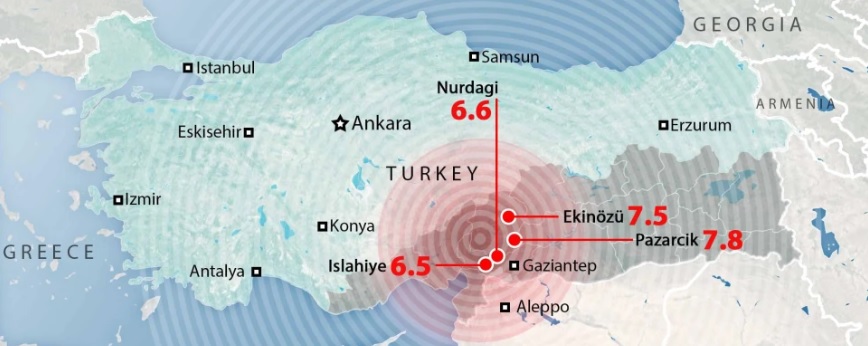
The epicentre of the first earthquake, a 7.8 magnitude, was outside of Gaziantep, approximately 200 kilometres from Mersin.

The second quake, a 7.5 magnitude, followed nine hours later, its epicentre 100 kilometres further north in near Ekinözü. Daughter and I had just returned home when this one struck. The building sounded like it was groaning and “popping” as it shifted back and forth. This one seemed worse, and we quickly moved to a doorway to ride it out.

The city of Mersin escaped virtually unscathed with only minor damage reported. But the cities of Gaziantep, Kahramanmaras, Urfa, Iskenderun and Hatay, not to mention Northern Syria, have been all but wiped from the face of the earth with nothing but mountains of rubble and twisted metal left behind.

It is difficult for me to articulate the thoughts that are currently zooming around in my head. We are safe. We have a home and food and are warm. We are fortunate, but too many families weren’t so lucky and are living through the most unimaginable horrors.

So far more than 28,000 people have been killed and tens of thousands of people are still missing. More than 100,000 people have been injured and hundreds of thousands of people have been displaced.

This is a disaster that Türkiye and Northern Syria were not prepared for, despite what officials may say. The destruction zone is over 99,000 square km’s. For context that’s larger than the country of Hungary or the Australian states of New South Wales and Victoria combined.

Our village here in Mersin has a large number of extended family from Hatay and the loss and grief can be felt in every home. My beloved sister in law lost family members and the few who were lucky enough to be pulled from their home are now safely here in Mersin.

People have asked me why was the damage so bad?

I have opinions as to why so many buildings collapsed, particularly those new-builds that were built to “withstand earthquakes” but for the sake of my family I won’t elaborate further. Those of you who live here in Türkiye already know the answer. For those of you who don’t, a simple Google search will provide you with more information.

Instead, let me tell you the story of my sister in law’s family.

Their home was in the ancient city of Antakya, in Hatay. It was built well over 50 years ago as a single storey dwelling. When children grew and married, they built another home upstairs, and so on and so forth. All in all, the building was four levels. Four levels equal four families. Grandmothers, aunts, uncles, parents, children and grandchildren all happily living together under the one roof until 4:17AM on 6 February 2023. Sadly, the foundations and columns were not designed to withstand the additional weight of those three levels and when the first earthquake struck the building collapsed.

Their entire neighbourhood is no longer standing.

Can you imagine?

Now imagine that in an area of the city you live in. Single-level residential buildings or multi-level residential buildings. New and old. Completely gone.

It has now been six days since the earthquakes struck. Governments and international organisations from around the world have responded with assistance but here on the ground it was the Turkish community who acted as one to assist with rescue and humanitarian efforts, even before any AFAD (Ministry for Interior Disaster and Emergency) teams arrived in affected areas. Within hours trucks were rolling out from Mersin with rescue teams as well as desperately needed food, clothing and medical supplies.

People are miraculously still being found alive and pulled from the rubble of their homes. We all pray that there are still more survivors that will be rescued in the coming days but the chances of finding survivors decreases as each day passes.

So, what happens now?

Türkiye will rebuild although perhaps not on the time-frame stated by those in charge.

With thousands of buildings now rubble across dozens of cities it will be years before these cities will resemble their old selves. Even intact buildings that look fine, their structural integrity may well be damaged with more buildings will likely need to be torn down.

Rebuilding critical infrastructure will be a high priority. The affected cities water supplies, sanitation services, electrical grids and transport have been damaged. Hospitals, schools and government buildings have collapsed. Right now, telecommunications to some of the smaller villages is still out (and I won’t make reference to the recent blockage of Twitter imposed at a time when rescue teams were using that form of social media on the ground to collate and map locations of people trapped under the rubble).

Here in Mersin survivors have been arriving daily. Hotels, dormitories, conference halls and private homes have opened their doors to provide temporary accommodation to those citizens who are in need, but this is only a short-term solution. Continued support and aid will be needed for many years to come.

What can you do to help?

I know times are tough for all of us right now but the best way you can help here is to donate money. The honest truth is that the collection of goods from abroad, while done with the best intentions, may never end up on the ground here due to many factors such as damaged roads, and inclement weather right now. Countries such as Australia and the US are just too far away. Money donations however will ensure that items that are so desperately needed will be purchased from locations close to the disaster zone. This will enable the fastest possible delivery to those people in the greatest need.

And don’t forget that even a small sum will make a huge difference here. You’ve probably already seen the posts on social media but just a reminder:

€10 is 28 loafs of bread.

US$10 is 130 bottles of water.

AUD$15 is 46 baby nappies.

AHBAP is an NGO based here in Türkiye. You can donate to them here.

Lisa Morrow of Inside Out In Istanbul has also written a post about overseas donations. You can view her post here.

Thank you to everyone who has reached out. Your thoughts and prayers are greatly appreciated from everyone here in Türkiye.

And in case you’re wondering my wonderful fat cat, Evil, got a big bowl of lactose-free milk and lots of thank you hugs for warning us before the earthquake struck.


If want a copy of the ultimate guidebook to Mersin you can grab your copy at any of the following online retailers (and yes it is available in Turkiye):

Amazon US – Kindle or paperback

Amazon UK – Kindle or paperback

Trendyol – paperback (Turkiye only)

Akademisyen Kitabevi – paperback (Turkiye only)

All sales of my books in February will be donated to AHBAP towards the relief effort.

Kanlıdivane

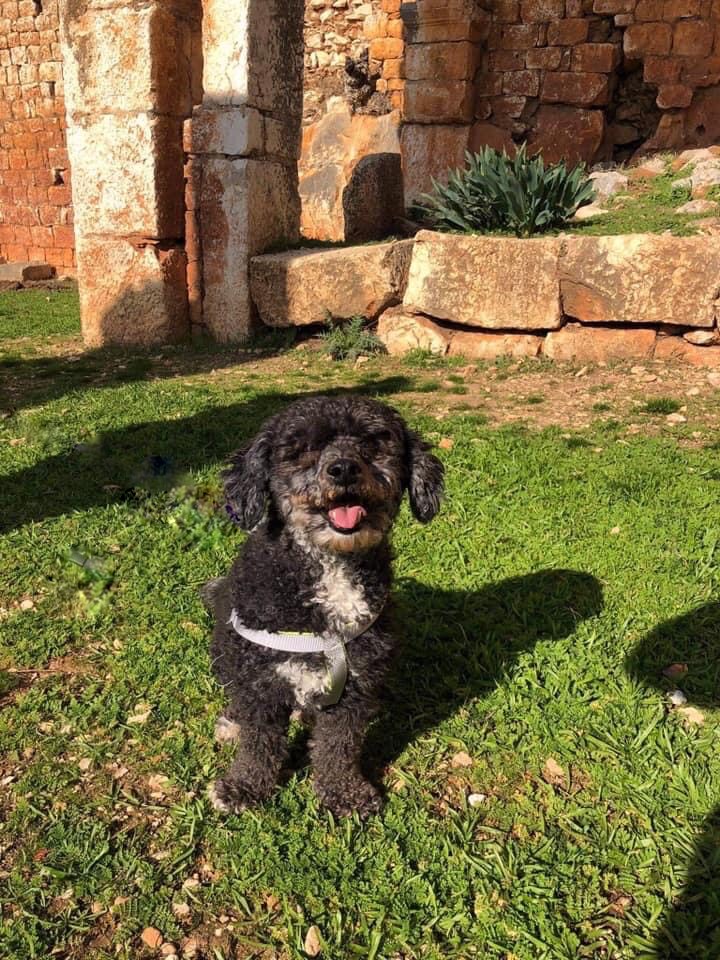
As you all know I love to take my cross poodle / bishon fraise, Hurley, out on adventures. He’s 12 now and becoming a bit of a grump so we want to keep him happy and active as much as we can.

Recently Daughter and I took My Hurley Dog to the Kanlıdivane Archaeological site north of Ayaş, Mersin.

The entire archaeological site is built around a natural sinkhole. Among the highlights, there are: the Tower of Zeus Olbios, the Armaronxas Family’s Relief, the Church of Papaylos, and a temple mausoleum. The mausoleum was built by Queen Aba for her husband and sons who are said to have perished in a plague.

Like most archaeological ruins, Kanlıdivane has a rather gruesome back story attached to it. It is said that the Turkish name, Kanlıdivane, derives from the ancient name Canytelis, which translates to “bloody crazy”. Now, technically, it no doubts refers to the red colour of the walls of the sinkhole; however, I prefer the legend that in Roman times criminals would be executed by throwing them into the sinkhole: Totally plausible reaction if you ask me.

A five-minute walk up the road from Kanlıdivane leads you to Çanakçı rock tombs. These four tombs have figures carved into the walls and an inscription condemning any grave robbers that happen upon them.

Kanlıdivane has been extensively restored by the government with pleasant walking paths (although those cobblestones are not high-heel friendly so wear walking shoes), good parking, clean toilets (always a bonus) and a small café and shop.

And, yes, My Hurley Dog had a wonderful day.

The Mersin International Music Festival holds concerts here each year.

Hours:        10.00AM – 17.00PM (summer) | 8.30AM – 17.00PM (winter)

Address:     Kumkuyu, Kanlıdivane Caddesi, 33750 Ayaş Bulvarı, Erdemli/Mersin

Telephone: 0324 231 96 18

Cost:           ₺12.50 (circa 2022)

Difficulty:  1

The only way to get here is by private car. From Mersin, head west down the Mersin-Antalya yolu (D400), then follow your GPS directions into the mountains.


If want a copy of the ultimate guidebook to Mersin you can grab your copy at any of the following online retailers (and yes it is available in Turkiye):

Amazon US – Kindle or paperback

Amazon UK – Kindle or paperback

Trendyol – paperback (Turkiye only)

Akademisyen Kitabevi – paperback (Turkiye only)

Did you know Janey in Mersin was recently named one of the top 15 expat Blogs in Turkey by Feedspot?
Ch-ch-check it out here!

Life, Interrupted

Gosh it’s been eons since I gave you guys a proper update of life here in Mersin.

Summer is upon us yet again and bloody hell it’s hotter than Satan’s asshole after a dodgy tantuni (my most recent Twitter post)! With things hotting up I intend to spend as little time as possible in front of the computer and as much time as possible at the beach… or in the pool. Yep, I live in a complex with a pool, and a beautiful garden, and 24-hour security… everything a girl could ask for… including an elevator (my knees are forever grateful!)!!

I am officially now a city girl and completely spoilt for choice.

Don’t get me wrong, I wouldn’t give up my time in the Village for quids. It was always one hell of an adventure. But living in the Village permanently was hard work (which for those of you who have followed me since the beginning will know all about). My relationship with The Turk was never that strong to begin with, in fact one of the reasons we moved to Türkiye was because he was so miserable back in Sydney. Surely moving back to his homeland would make life better? Pfftt!

What I’ve now learned about The Turk is that he is a glass is always half empty kind of guy. He is a very good man who makes extremely bad decisions and will always put everyone else’s needs ahead of mine and Daughter’s. As time went on life just got harder. We spent little time together to begin with, as time passed little became practically none… and I realised that I didn’t really care. COVID struck with a vengeance, then the economic crisis, and we took hit after hit after hit. It was time for me to re-assess what I wanted to do with my life.

And while I didn’t want to leave Türkiye, I couldn’t continue to live in such a toxic environment. The backstabbing and bitchiness that would go on in the Village was astounding, and wayyy too much of it was directed at me. Every day there was yet another drama and, in the end, my mental health was becoming affected. I had to make a move.

Within a week of coming to my decision I had found an apartment to rent. It’s in an amazing part of the city, close to my favourite Migros and, even more importantly, my favourite restaurant!

It’s been 18 months now since I moved out of the Village and into the city and it has changed my life. Daughter is well on her way to finishing a communications degree and recently returned from Australia. I’ve written and published two more books (including a guidebook on Mersin… you can grab your copy here). I’m putting finishing touches to my next novel, Galata and Nutmeg as well as a contemporary fiction novel set in Mersin that has blown out into an epic saga is now on its second round of edits.

So if you’re looking for me I shall be by the pool… or maybe at the beach… or maybe, just maybe, having an extraordinarily large glass of red wine at my favourite restaurant (which is now stumbling distance from home).


Loving this blog? Please help me build my audience and share with like-minded people who, like you, want to know more about this beautiful part of Türkiye. You can also subscribe or like me on Facebook for all updates.

Foodie’s Paradise

I’ve been thinking about food quite a bit the last few weeks. Maybe it’s the cold weather, maybe it’s the only thing I miss about living in the Village, but either way, I’m hungry.

Food in Mersin is rather unique with its mix of Turkish, Ottoman and Arabic, and a flavour all of its own. Food is always better when it is produced locally, when it is distributed locally and when it reaches the table locally. One of the biggest attributes to Mersin food is everything is fresh, straight from the pazar to the table. Here are some of my absolute favourite foods to enjoy in Mersin.

Photography by Nancy Habbas

Tantuni

Mersin has many dishes that originated from the province. My favourite and probably the best known of all Mersin dishes is – the tantuni!

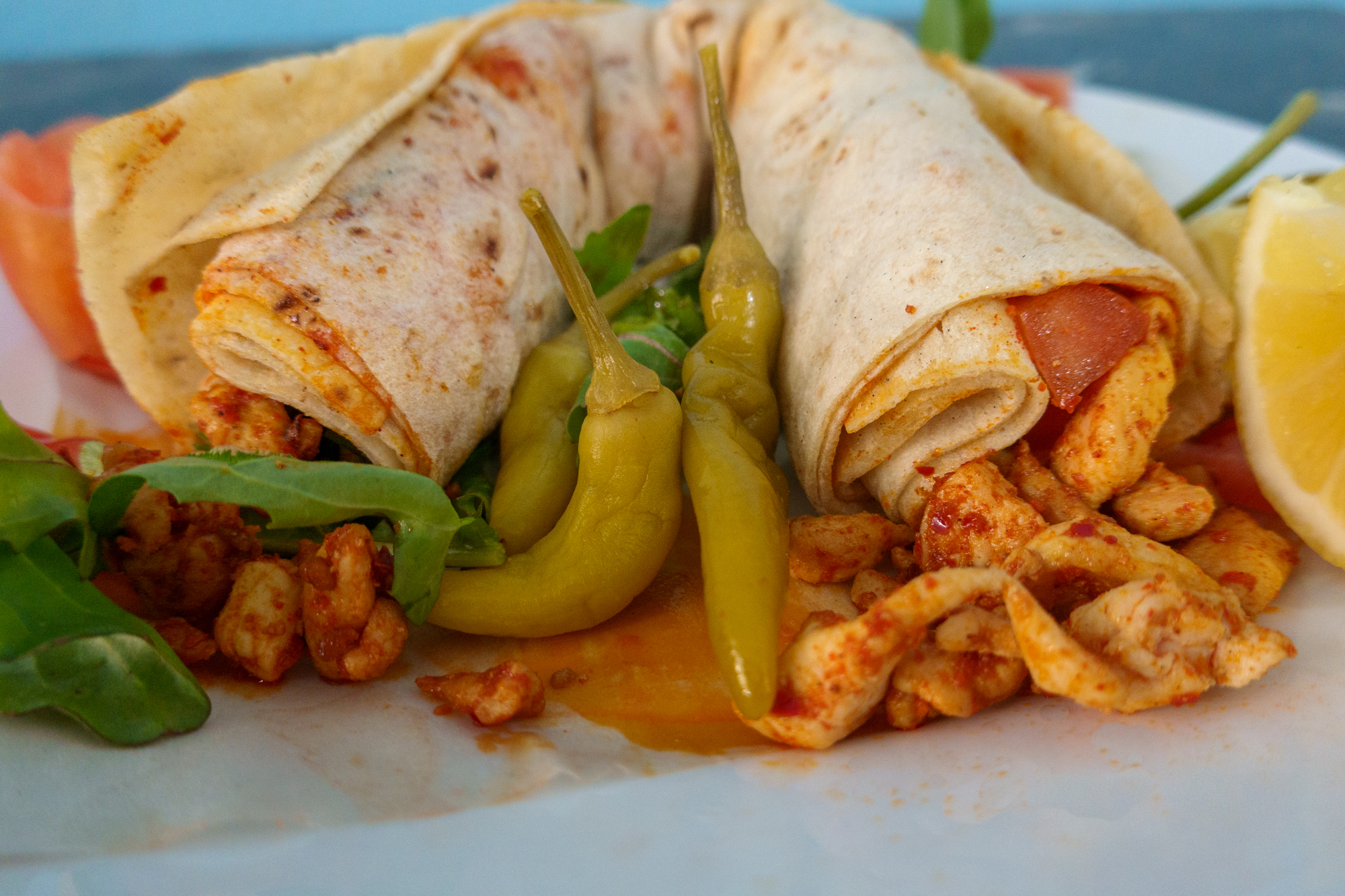
Tantuni is a traditional street food dish consisting of thinly sliced beef that is seasoned with Turkish spices and herbs, usually cooked with onions and tomatoes. The combination is cooked in specially designed tantuni pans.

Traditionally, the dish is served rolled in a durum wheat wrap, with ground sumac and a lemon wedge on the side. Since every tantuni chef has his own method and secret technique of preparing the dish, it is said that the flavours of tantuni are never the same. 

Icli Kofte

Anyone who has been to a Middle Eastern or Lebanese Restaurant would have tried the similarly made Kibbe, but I know that a Turkish Icli Kofte is just that little bit better. They are incredibly difficult to make, and the few times I’ve tried have been nothing more than a disaster, but if you happen upon a local making them do not leave before you taste one (or a dozen).

Künefe 

Künefe is a crazy ass desert served here in Mersin and throughout Turkey made of cooked cheese, syrup and icecream. Künefe is well known throughout the provinces of Mersin, Gaziantep, Hatay, Kilis and Adana, although it is served in many Arabic countries.  If you do want to make an attempt of this amazing dessert I suggest you go check out Ozlem’s recipe.  She is, as usual, my go-to person when attempting Turkish food but this one looks a little out of my league.

Cezerye

Made with caramelized grated carrots, sugar, and nuts, this sweet concoction is rolled into balls and usually covered with shredded coconut before consumption. When I was in Tarsus recently, I was told that Cezerye is an aphrodisiac, so consume with caution.

Kısır

A classic Turkish salad made with thin bulgur wheat, tomatoes, mint, garlic, parsley, and either lemon juice or sour pomegranate molasses. Red pepper flakes are often added to the salad to make it spicier. A must-have for your mangal.

Sarimasakli Kofte

People may try telling you this is an Adana dish but don’t you listen to them, it’s definitely a Mersin tradition. Made from the same bulgur wheat as the kısır, they are rolled into tiny balls and boiled. After cooking its topped with a sauce made with garlic, lemon, salca, parsley and oil. Delicious.

Batkırık

Similar to kısır, batkırık is my go-to for a quick and easy meal. These are so easy to make but the secret to a successful batkırık is the sauce. Onion, cumin, salca and oodles of garlic. Mix it into the bulgur wheat before making patties. Batkırık is also sometimes made as a cold soup with tahini and water added.

Fındık Lahmacun

A specialty from Tarsus, these are easy to snack on at any time of day. Topped with mince meat, herbs, red peppers and spices, these have the added ingredient of hazelnuts before being baked to perfection.

Sıkma

When you’re driving down the D400 you’ll probably pass tiny shacks on the side of the road selling sıkma and çay. Usually made with flat durum wheat break or rolled pastry they are filled with onion, white cheese and parsley. Sıkma means handshake so I imagine these little morsels were thus named because they fit in your hand so easily.

Karsambaç

A traditional dessert originating from Camliyayla, a small town high in in the Toros mountains. Similar to a snow cone, but completely unique, Karsambaç is made with a combination of clean mountain snow (straight from the mountain) and a sweet syrup such as sugar syrup, or molasses.

Taş kadayif

Crispy on the outside, walnut in the middle, and coated in a decadent sugary syrup.

Kerebiç

A local dessert unique to Mersin, is made with semolina and is often served during Ramadan.  


Loving this blog? Please help me build my audience and share with like-minded people who, like you, love fabulous Turkish breakfast and you also love Turkey. You can also subscribe or like me on Facebook for all updates.

The Bane Of My Existence

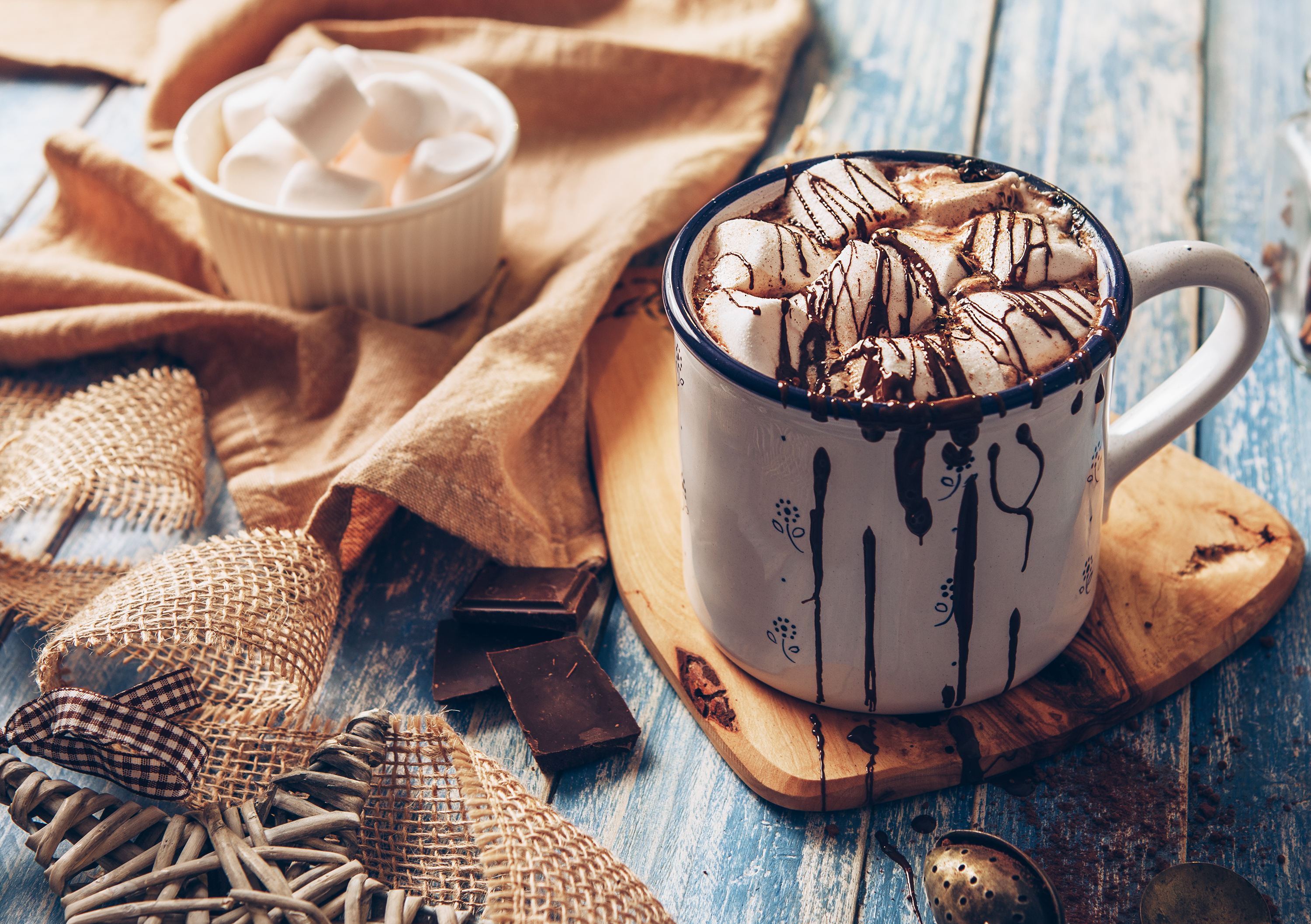
No, I’m not talking about my monsters-in-law (although they would run a very close second). I’m talking about my inability to get a fecking decent hot chocolate here in Mersin.

I love me a good hot chocolate. Always have, always will. As a child, my mother would make hot chocolates with cocoa and marshmallows, and as an adult non-coffee-drinker, I would usually buy myself a hot chocolate as a treat for my morning pick-me-up. Today, and particularly in winter when Mersin’s temperatures resemble the Artic circle, a hot chocolate is my go-to to warm up my weary bones.

Türkiye is famous for its excellent kahve (coffee) and its çay (tea) served in tulip-shaped glasses. Sipping on a çay as you shoot the breeze is practically a national sport. People just don’t drink hot chocolate. And I appreciate that, in fact before Starbucks arrived in Mersin getting a decent hot chocolate was as rare as hen’s teeth. If you were lucky enough to find a place that serves them, they usually varied from bad to an abomination that will live in infamy in certain circles. But hear me out, if a restaurant has sıcak çikolata (hot chocolate) on the menu, then damn it, they should know how to make one, at least.

“If you’ve ever wondered what tar and the tears of children taste like – drink their hot chocolate.”

Moe, 2022

This quote refers to the most God-awful concoction that was purportedly passed for hot chocolate that I and my friends had the misfortune to try from a very well-known restaurant here in Mersin. I will not name the restaurant, mostly because I don’t need the blow-back, but let me tell you the story.

After a lunch with a group of my yabancilar friends, a few of us decided to hang around enjoying the pleasant ambience of the restaurant. We would frequent this place regularly. The food was pretty good and the prices were always reasonable. At this point I should mention that there was in fact a Starbucks located directly across the street but we chose to stay put, mostly because we couldn’t be assed standing in the queue.

Hot chocolates were ordered.

Within minutes a glutenous concoction in a small white mug was delivered to each of us. It was thicker than mud, hotter than the sun, and as stomach-churning as kokoreç (well-known Turkish offal dish) on a good day. Honestly? It resembled the packet pudding that is so often served in Türkiye and tasted like it as well. After a polite explanation as to how a hot chocolate should be made, the apologetic waiter retreated to re-order. We stared longingly at the people sitting in the sunshine opposite us, no doubt sipping on their perfectly made Starbucks hot chocolate, until our waiter returned with attempt number 2. I crossed my fingers for him and for us, I even prayed to all the deities available to me that it would be good.

It was not good.

Am I a Karen? Have I become an entitled expat who expects the niceties from my homeland having no regard for local custom? I took a Buzzfeed quiz to check whether I am, in fact, a Karen and can thankfully report that I’m only half Karen… the other half is pure Janey with a little bit of bitch thrown in for good measure.

And while I’m just having a little whine for comedic purposes it doesn’t take away from the fact that I just want a fecking decent hot chocolate!

_________________________________________________________________________

Loving this blog? Please help me build my audience and share with like minded people who, like Moe and I me, love a hot chocolate, and also love Türkiye. You can also subscribe or like me on Facebook for all updates.

Inside Out In Istanbul

The passion for traveling has been something that people have been doing for centuries now, but being able to document and blog your traveling adventures is just awesome.

Lisa Morrow is a great example of an expat and blogger who has documented her life in Istanbul. With her very popular blog, Inside Out In Istanbul, and four best-selling books released to date, it’s time to get inspired and discover what it’s like to live in Istanbul with my excellent interview below.

I first met Lisa in Istanbul during one of my getaways from Mersin. I must admit I was a little intimidated by her because

she was such a successful author and blogger, whereas I was just a dabbler writing what amounts to “filth” in some people’s eyes (you’re welcome, by the way).

But I am happy to report that within the first moments of meeting Lisa my fears were unfounded. Here is a woman who, like me, is doing what she loves, and blessed to be doing it in one of the most beautiful cities in the world. A northern-beaches girl, a lover of Vegemite, and one of the most down-to-earth people I have ever had the pleasure to meet.

Your blog was one of the first blogs I found when I decided to move to Turkey and I think I read each and every post you wrote. When did you start blogging? And how, or perhaps when, did you make the decision to take what you’ve written and turn it into a book (or, more correctly, 4 books)?

Actually it was publishing the first edition of my essay collection Inside Out In Istanbul in 2011 that started me thinking about blogging. I wrote this book for people planning to come to Istanbul or those who’d already visited once, wanting to better understand what they see and experience in the city.

I was really new to the world of social media back then so it took me until 2013 to start my own blog. At that time most internet sites about Turkey were either commercial ones selling tours, travel insurance and so on, or personal blogs by people who had visited Istanbul but never lived here. I wanted to share the Istanbul I live in, the real everyday extraordinary of the city outside the well-known tourist areas.

For my blog I usually write short pieces capturing my impressions or put together photo essays. However my passion and I believe my forté is writing essays that combine Turkish culture and history with my personal experiences. The longer I live in Istanbul and the better my Turkish becomes, the more I have to write about, which is how my other books have come about.

Did publishing your first book change your process of writing?

Not really. I’ve always made sense of the world through words. I have to be able to accurately describe what I see and experience in writing, otherwise my understanding remains incomplete. It’s the feedback I’ve received from readers rather than the process of writing and publishing my books that’s had the biggest impact on me. Readers say they feel like they’re walking the streets alongside me in Inside Out In Istanbul. Strangers feel they know me after reading my memoir Waiting for the Tulips to Bloom. Turks no longer living in the country say Exploring Turkish Landscapes makes them feel homesick but also as though they’re back home at the same time. It’s gratifying and rewarding to hear all this and makes me want to continue writing in the same way.

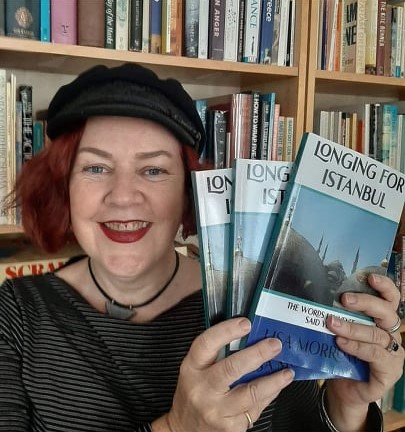
Congratulations on becoming an Amazon top 10 seller with your most recent release, “Longing for Istanbul: The Words I haven’t said yet”. That’s an amazing achievement (I’m not at all jealous). Has becoming a Top 10 seller changed how you look at marketing? Do you market? Or do you rely on word of mouth or other reviews?

Thank you for the compliment. Selling is, as you know, hard work and marketing is key. Millions of books are published every year and even though books sales increased worldwide in 2021, unless people hear about your books they won’t know to buy them. Being a Top 10 seller is fabulous but statistics change all the time so I never rest on my laurels. Word-of-mouth is really important but my audience spans the globe so I do market on Facebook, Twitter and Instagram. Strangely, although the latter is based on visuals, it’s a good platform for authors. However reviews on Amazon and Goodreads do have a big impact. These days a lot of people want to know in advance they’re going to like your book, so a positive review, even a short one, goes a long way.

Speaking of reviews… do you read them? And how do you deal with less than favourable ones?

Many writers say not to read reviews but I do. Writing is a solitary occupation and a lot of the time it feels like throwing ideas out into space and never knowing where or if they’ll land. Positive reviews are the echo telling me a reader gets what I’m trying to do. Luckily I haven’t had too many unfavourable ones (fingers crossed saying this won’t jinx me). What I really dislike though is when a reader gives a one or two star rating and can’t be bothered to say why. Maybe they don’t like Turkey, possibly they don’t like something they think they know about me or it could be they really didn’t like my writing after all. Unless they give a reason, it just pulls down the book rating and doesn’t help potential readers decide whether to buy it or not, which is one of the major reasons to leave a review.

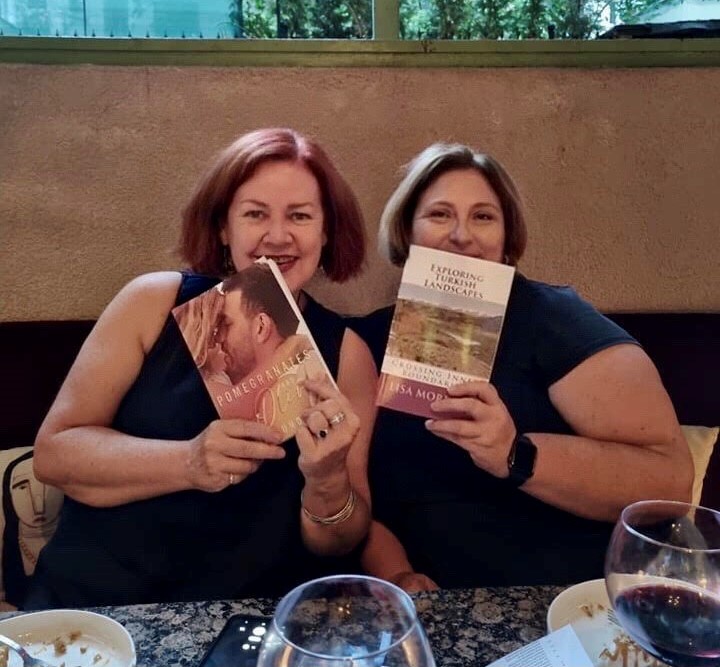
You recently had Exploring Turkish Landscapes: Crossing Inner Boundaries translated into Turkish (Türkiye’yi Keşfederek Sınırlarımı Aşarken). Why did you decide to have it translated and where is it available?

Back in 2019 I was interviewed by SBS Turkish radio (in Turkish) about why I moved to Turkey with my husband Kim, also a non-Turk. After it broadcast I received dozens of messages from people telling me I was THE topic of conversation in supermarkets in Melbourne, Australia, where the majority of Turks live. This was the first time they’d heard from a non-Turk who’d chosen to live in their home country and they were fascinated about why I’d done so and what it was like. Many of them were thinking of moving to Turkey themselves, even the Australian born ones, and they really related to what I said in the program. It was clear to me I should make my books available in Turkish because there was an audience keen to know more.

I chose to start with Exploring Turkish Landscapes because it covers my experiences in different parts of the country, and at different stages of my life and knowledge of Turkish language and culture. It’s available in Turkey as an ebook through D& R or internationally from Kobo and in paperback from Barnes & Noble and other booksellers.

I’m visiting Istanbul right now doing research for my next book… a literary pilgrimage, so to speak. What kind of research do you do, and how long do you spend researching before you visit somewhere new?

When I first left Australia to travel to London and from there to Europe and eventually Turkey, I did very little research. The internet didn’t exist, travel guides were heavy and expensive and I preferred to party than check out books at the library. Now the internet provides thousands of websites, blogs and references and it’s easy to drown in too much information. I’ve been to all the main tourist sites in Istanbul, many several times, but these days I travel further afield. Every outing involves food in some way, whether it’s a new restaurant to try or going to a shop selling specialty Turkish foods or hard to get non-Turkish items.

Usually what happens is I’ll be on my way somewhere and spot something unexpected from a bus or the corner of my eye. A church tower or intriguing doorway I hadn’t noticed before, a sign that piques my interest or an unusual window display. Depending on my schedule (and my hunger) I might go in straight away, or just make a note or take a photo and research it when I get home. I use guidebooks and the internet to find out more and focus mainly on Turkish origin blogs and websites as they often contain more information than those written in English. However I read a lot of non-fiction books about Istanbul too, and when I come across references to places I don’t know about, I write them down and then go looking for them.

It’s the unexpected that excites me most so I prefer to visit a place first and research it later. Otherwise the joy of immersing myself in the atmosphere and discovering small beautiful details is lost in the act of looking for particular things noted in guidebooks. That’s the idea underpinning my essay ““Büyük Çamlıca Camii” in Longing for Istanbul.

Is there anywhere in Istanbul that you still want to visit, or perhaps a hidden gem that you’ve kept to yourself?

I think there will always be places I want to visit in Istanbul. My list expands all the time, partly because there is already so much to see but also because there are new discoveries being made almost everyday. Add to that long abandoned sites being restored and opened to the public and the possibilities are endless. My focus in the coming months (when it gets warmer) is to use Istanbul’s excellent public transport system to go further afield. I don’t drive in Istanbul so going to Beykoz, Atatürk Kent Park or Polonezkoy is a bit of an expedition. I enjoy it though, because being on trains, buses and ferries gives me what I call empty time, when I have the space to daydream and random thoughts often become concrete ideas.

One thing I really love about Istanbul is whether you’re rich or poor you can drink tea and eat a meal by the water, enjoying the same mesmerising views, no matter your budget. It’s very democratic in that way so my hidden gems are the places locals can go and feel like royalty, whatever their social status. Spoiler alert – they’ll stay hidden.

What surprises you most about living in Turkey?

How kind Turkish people are, no matter what’s going on in their lives. I’ve seen the Turkish economy rise and fall over the years and right now people are doing it tough. Yet that doesn’t stop them thinking of others. Last week I was on the way to my gym and an older man slipped and fell while running for a bus. He cut his forehead quite badly. I picked up his transport card as a younger man helped him up and both of us gave him tissues to help stem the blood. Two woman suggested he might need stitches so the younger man escorted him across road and directed him to the hospital. This level of assistance is normal. I tripped on a bollard once and fell over and people even crossed a busy road to help me!

Then there’s the traditional pay it forward schemes like askıda ekmek where you buy an extra loaf of bread for someone without means and the modern version called askıda fatura. People in need are carefully vetted by councils and the government so strangers can pay money towards their bills (fatura in Turkish). This level of humanity is rare in the world these days but it’s an everyday occurrence in Turkey,

I Googled you today. Not only are you an author and blogger but you also write for media outlets, like CNN. Have you got anything exciting in the pipeline you can reveal?

Yes I do. I have a feature on beaches along the Lycian Way coming out in CNN Travel in the next few months and have also had an article on Istanbul accepted by the New York Times. I don’t know when they’ll be published so watch this space!

Add your own question that you’ve always wanted asked but never has been…

I’ve always wanted someone to ask me what I find the most frustrating part of writing. The answer is finding the exact word to describe a specific moment, feeling, touch, taste, sensation etc. I want people to know how Istanbul smells, what it’s like to be bathed in urban sweat, the emotions you go through as you negotiate life in Turkey as a both a foreigner and a local, and that can be extremely difficult.

I grew up in a house full of books, played word games with my parents and am a former English teacher (both as a foreign and second language). I know words matter and choosing the correct one can be agony. However when I do find the word that expresses precisely what I’m trying to say, it fits into place seamlessly and gives my writing an almost organic character, as if it came into being fully formed. In truth it’s the result of hours sitting at my computer, staring out windows, making notes and writing the same sentence three or four different ways to see which one works best. Nonetheless, no matter how exasperated I get, I love writing. It’s a privilege to be able to share my words and thus my world with others.

_________________________________________________________________________

Loving this blog? Please help me build my audience and share with like minded people who, like Lisa and I me, love Istanbul, and also love Türkiye. You can also subscribe or like me on Facebook for all updates.